
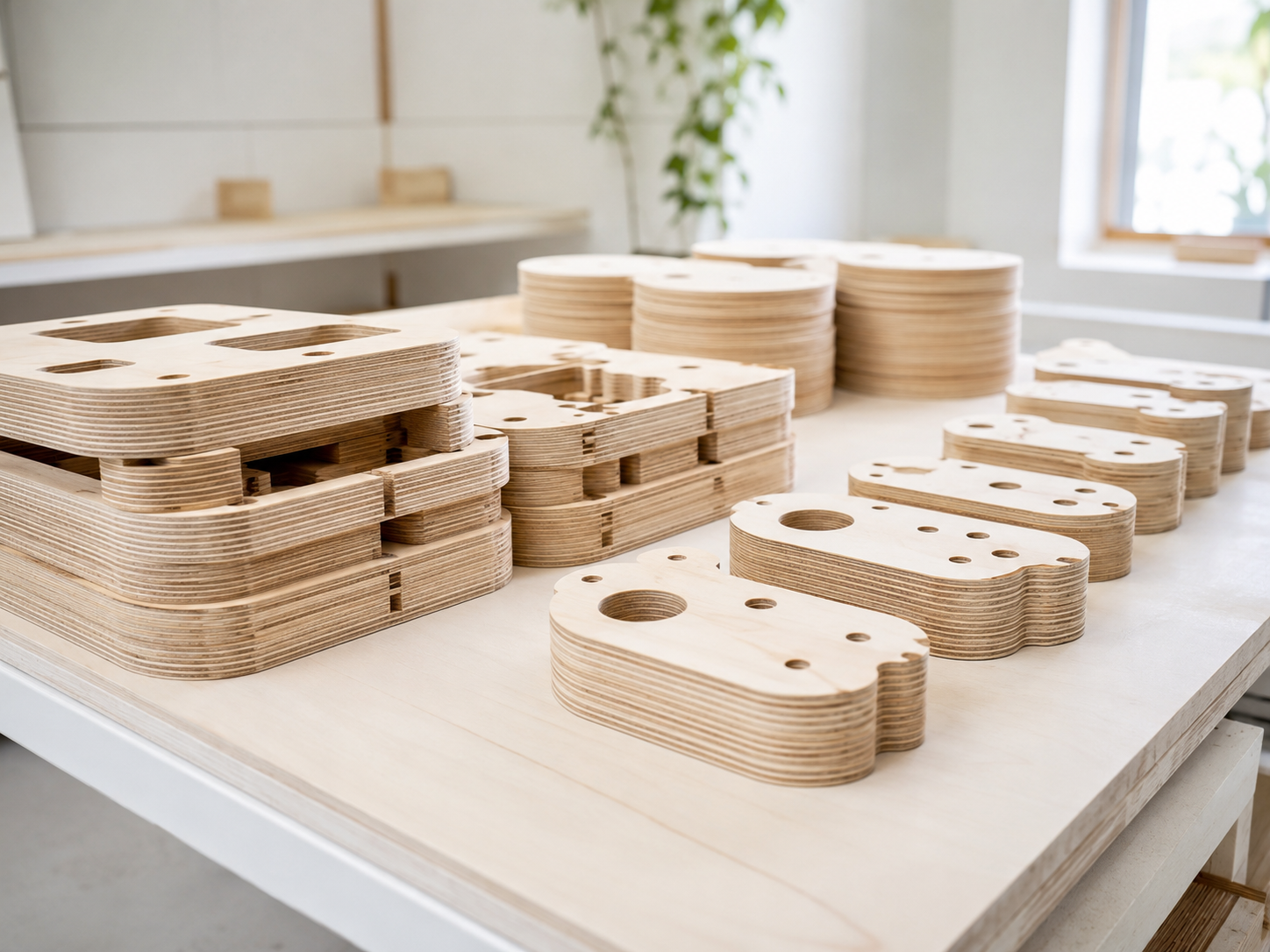
SMALL-BATCH PRODUCTION
Small-Batch CNC Production in Melbourne
Small-batch CNC routing for businesses, trades and product makers who need defined components produced in first runs and repeat batches.
Williamstown CNC Works machines plywood, MDF, timber and suitable plastic components from approved files and agreed quantities at our Williamstown North workshop.
The first run establishes the approved production files, material, nesting and machining setup. Once those details are stable, later batches can be quoted and produced from the retained production information.




Where are you in the production process?
Small-batch production works best when the product or component is already substantially defined.
Choose the stage that most closely matches your project.
The product still needs designing
You have an idea, reference image or early concept, but the dimensions, construction and finished components are still being developed.
This belongs under Designers & Custom Projects rather than production setup.
The product is defined but not production-ready
You have useful CAD, drawings or an existing product, but the files, fitted details, materials or part quantities still need to be prepared for repeat manufacture.
This is suitable for paid production preparation.
The production files are ready
The finished geometry, material, thickness, quantities and machining details are already confirmed.
This may be handled through the Ready for Cutting pathway.
The product has been made before
The production version is approved and you need another batch of the same components.
Send the latest files, current quantities and details of any changes.
A test component may still be required where material thickness, fitted joints or machining details need to be confirmed. This is different from developing the product from an early concept.
FROM DEFINED PRODUCT TO REPEAT BATCHES
How a product becomes a repeat production job

Define the production parts
The finished components, dimensions, quantities and intended material need to be sufficiently established.
The customer remains responsible for approving the product design and finished dimensions.

Prepare the production setup
Files are checked, individual parts are organised and the required machining operations are identified.
CAD cleanup, fitted-joint development, part naming and other production preparation are quoted where required.


Confirm the stable production version
Any approved changes are added to the production files.
The material, thickness, geometry and machining instructions should now be clearly recorded for later runs.


Run the first production batch
The first run establishes the material, nesting, tooling, machining order and practical handling of the components.
A test part or first-off may be produced before the full quantity where fit or function is critical.
Produce repeat batches
Later quantities can be quoted from the established production information, provided the product and material requirements remain unchanged.
The most efficient repeat production begins after the setup work is complete and the product stops changing.
Why the first run and repeat batches are different
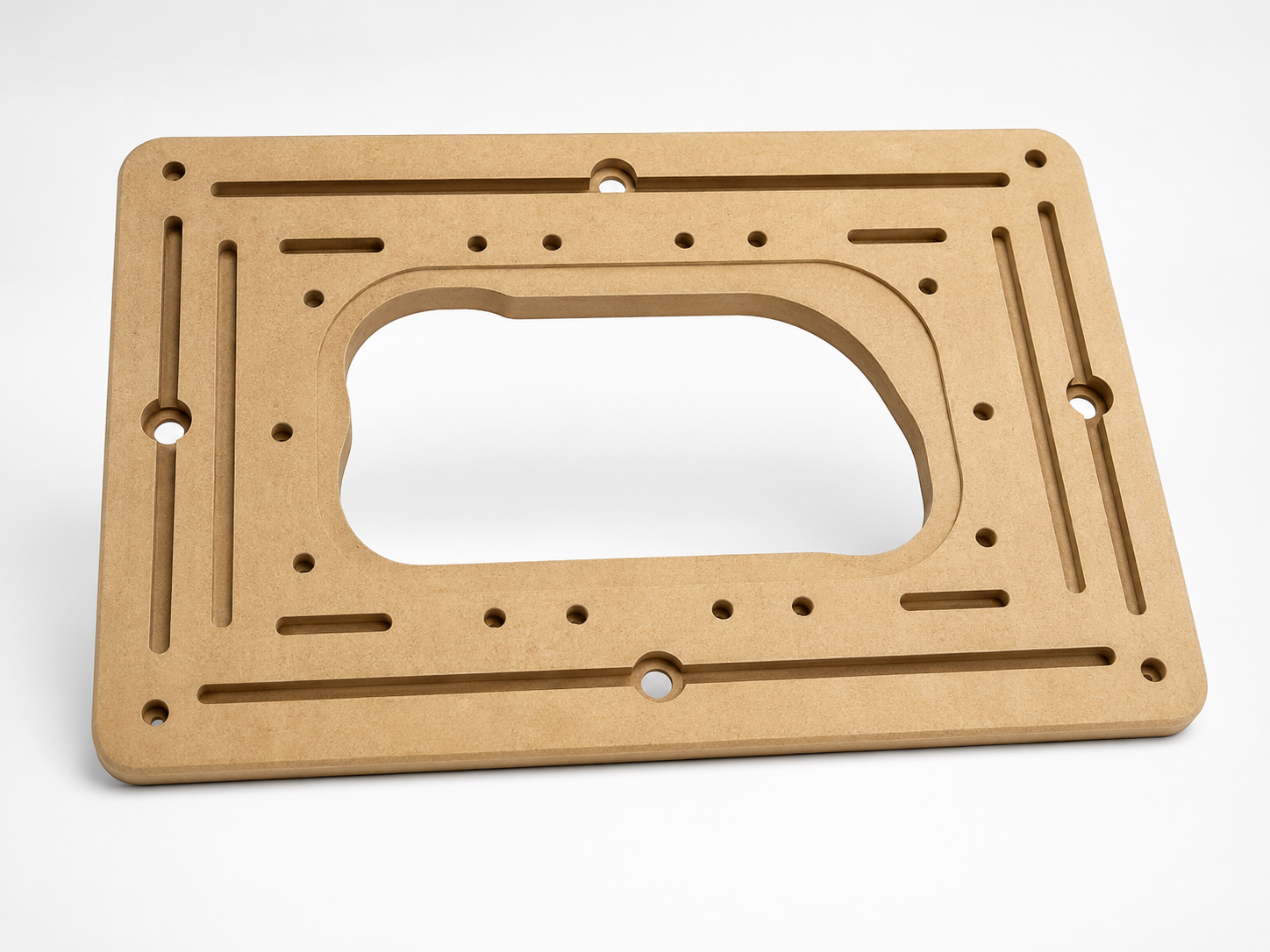
First production run
The first run commonly includes more preparation.
This may involve:
reviewing or repairing supplied files
confirming part quantities
measuring the production material
preparing fitted joints
programming machining operations
arranging the sheet nests
selecting tooling
producing test cuts
checking the first finished parts
recording the approved production version
These are setup costs rather than costs that disappear simply because the first quantity is small.
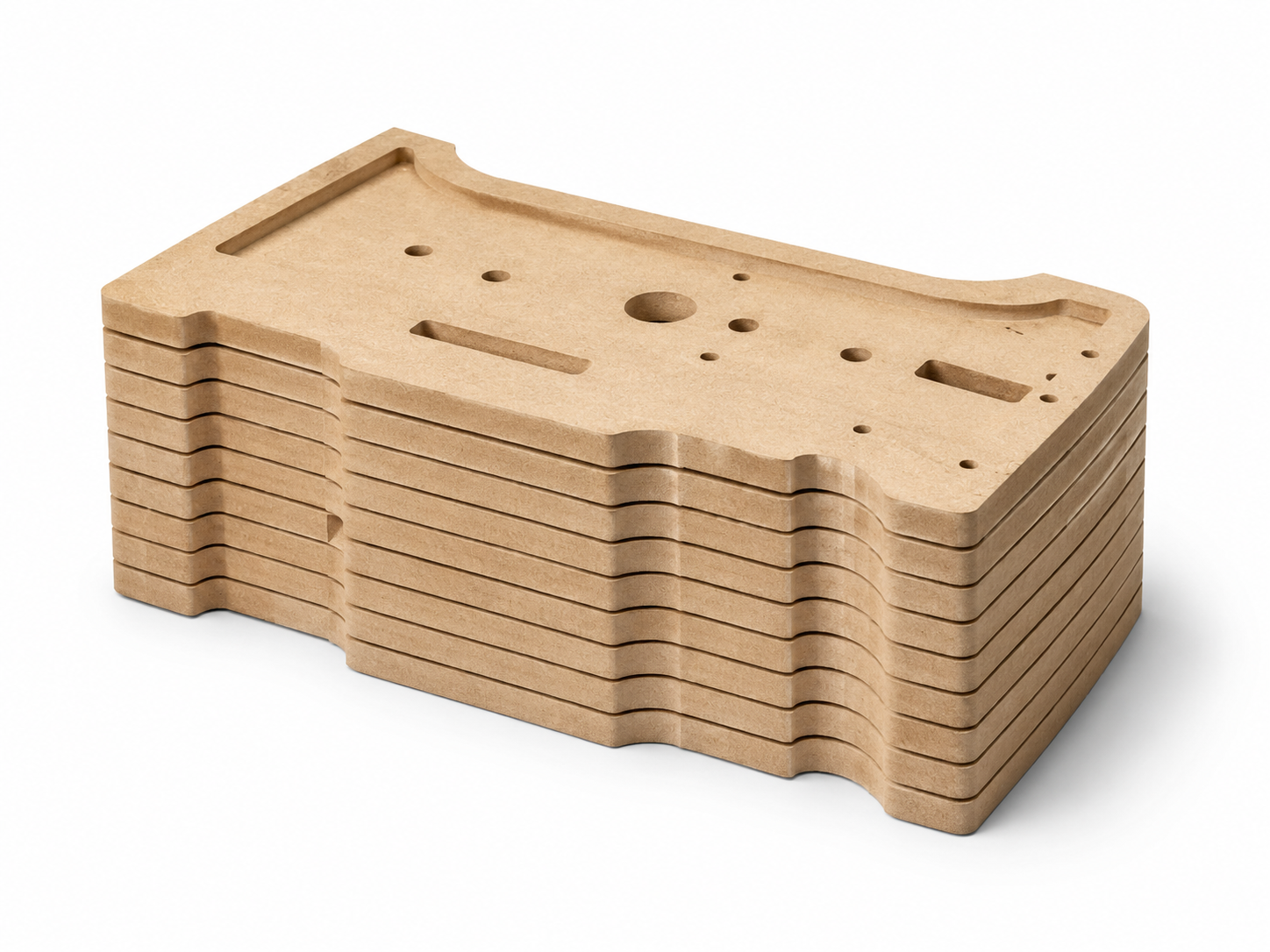
Repeat production batch
When the geometry, material and machining remain unchanged, some of the original setup can be reused.
Each batch is still quoted according to:
current quantity
material pricing
sheet yield
machining time
tooling and setup
handling and grouping
additional workshop work
packing or delivery requirements
A repeat order may therefore be quicker to review and more efficient to produce.
A retained production file does not create a fixed lifetime price. It provides a stable starting point for the next quote and production run.
PRODUCTION SUPPORT FOR YOUR BUSINESS
CNC Component Production for Your Business
Some customers sell the finished product. Others use the parts inside furniture, displays, fitouts, fabrication work or another manufacturing process.
Williamstown CNC Works can produce the CNC components behind that work while you continue to control the brand, product, assembly and customer relationship.
The production scope may be:
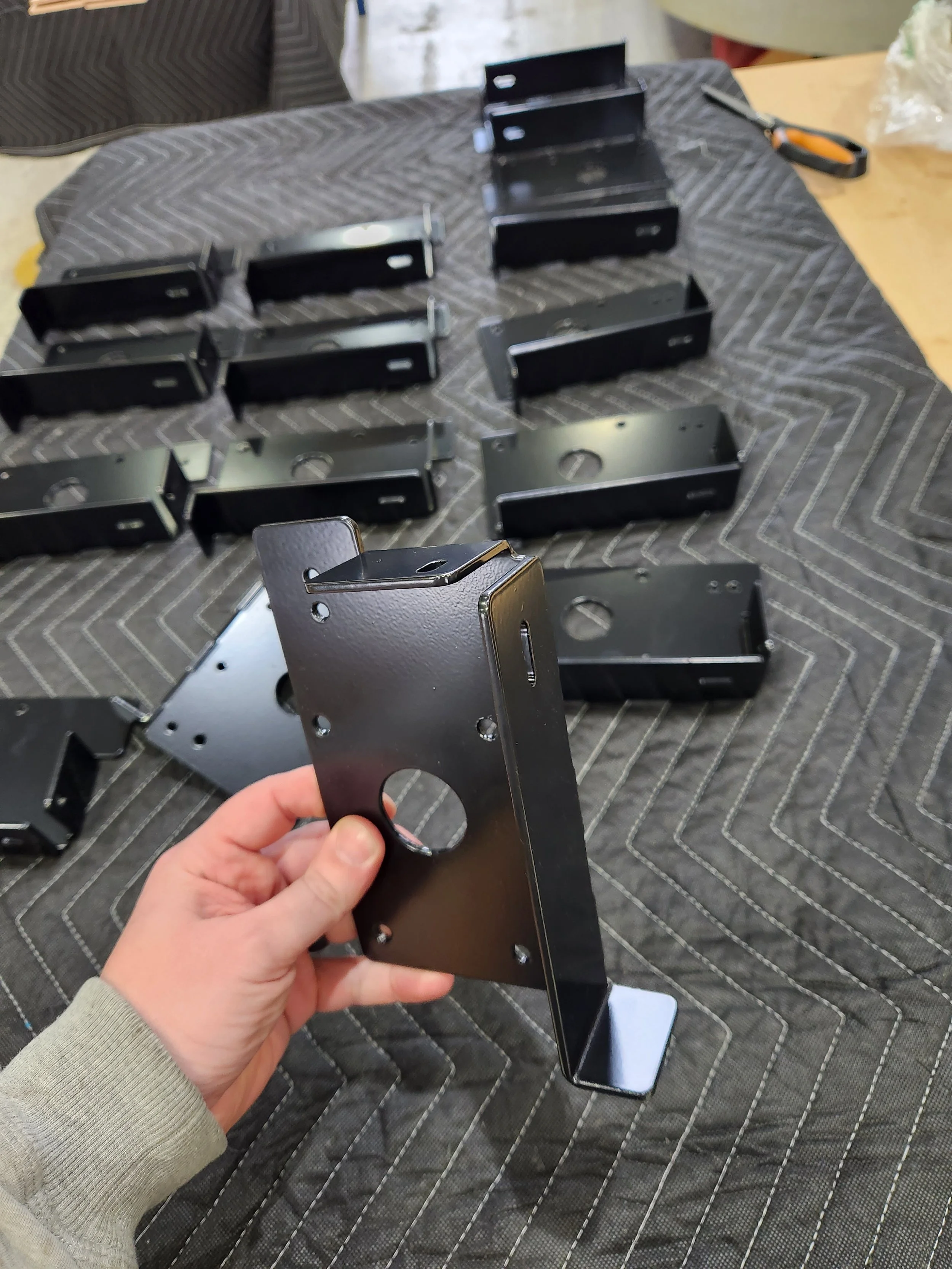
machined components ready for collection
grouped component sets
repeated parts supplied in agreed quantities
parts prepared for your own assembly
additional workshop work where separately quoted
Branding, product sales, customer support, assembly, finishing, packaging and distribution remain outside the CNC production price unless specifically included.
This suits businesses that need reliable workshop production without setting up their own CNC machining process.
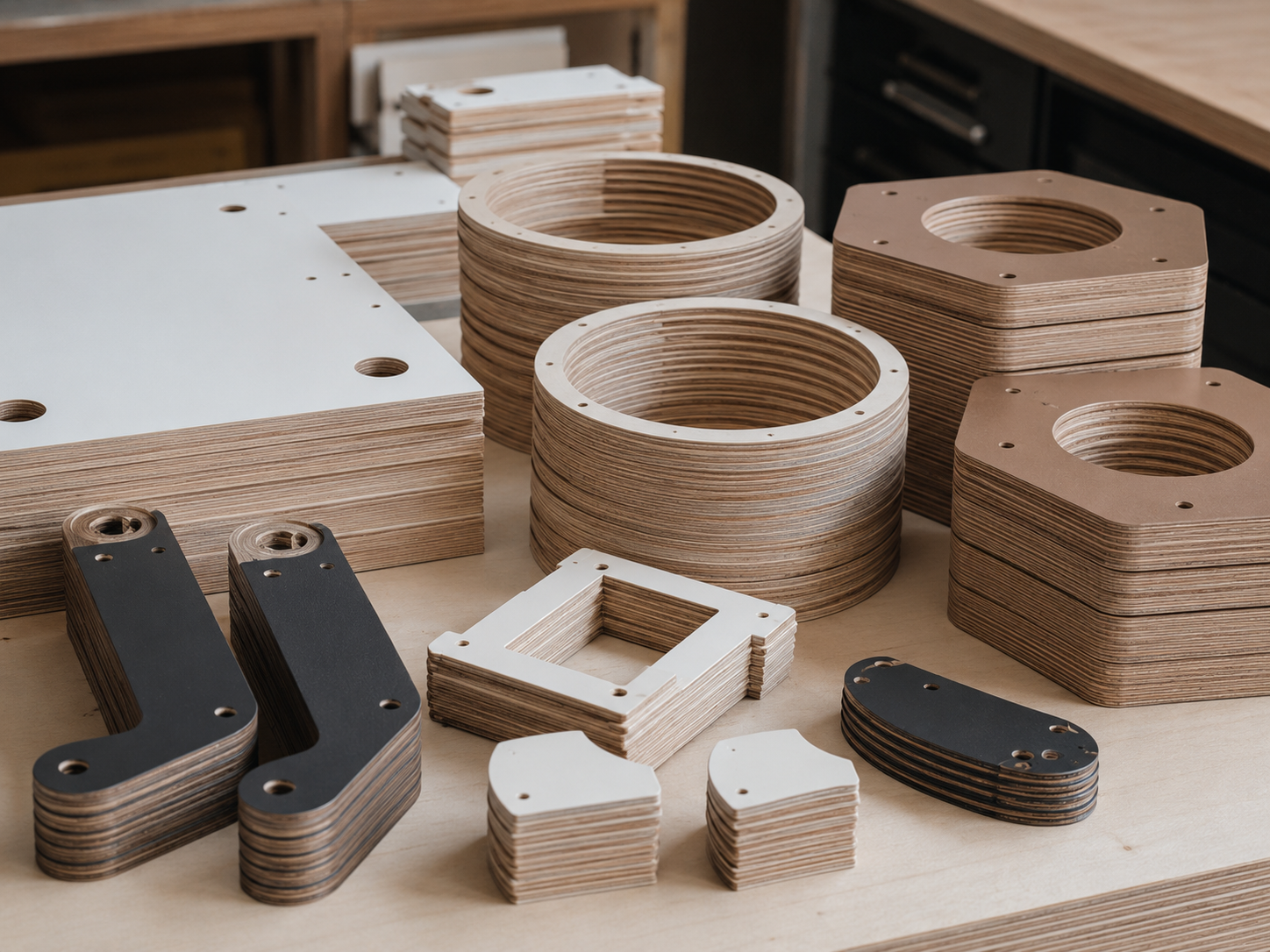
CNC Components Suited to Small-Batch Production

Furniture and product components
Panels, frames, supports, legs, brackets, inserts and fitted parts for furniture and physical products.
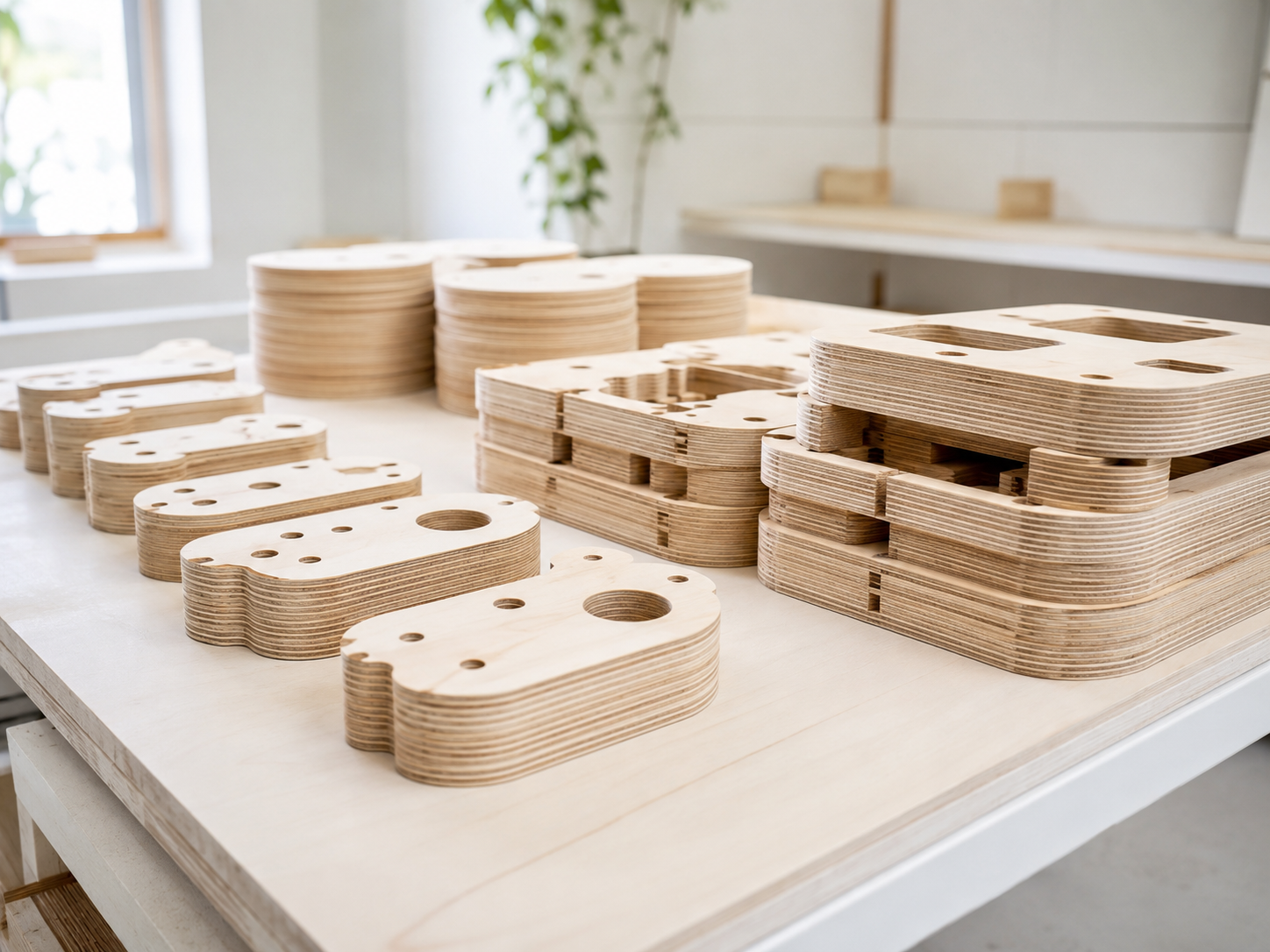
Plywood and MDF part sets
Repeated profiles, rings, circles, panels and assembly components produced in controlled quantities.
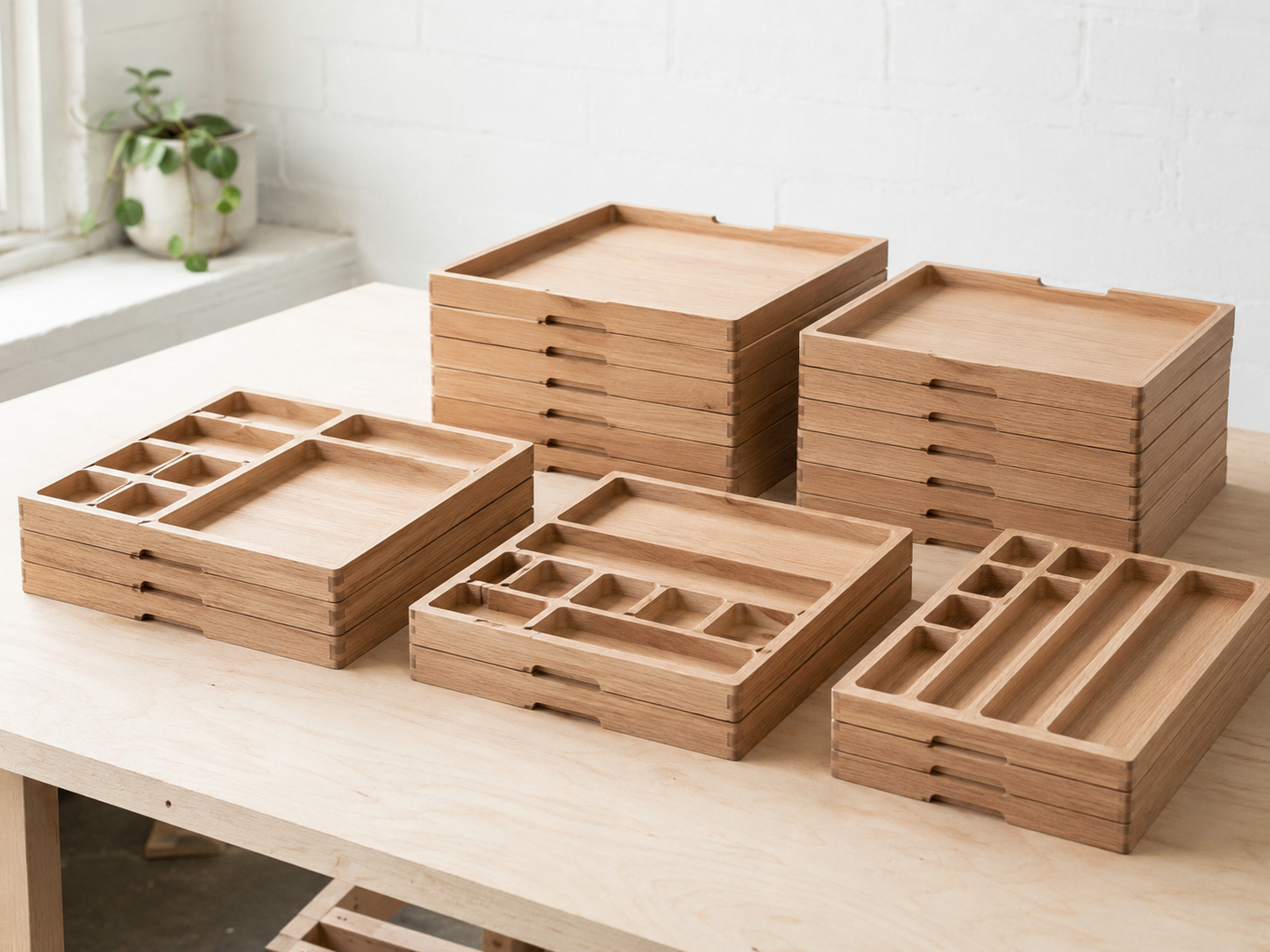
Timber trays and inserts
Solid timber or laminated components with profiles, pockets, rebates, holes, slots or shaped details.
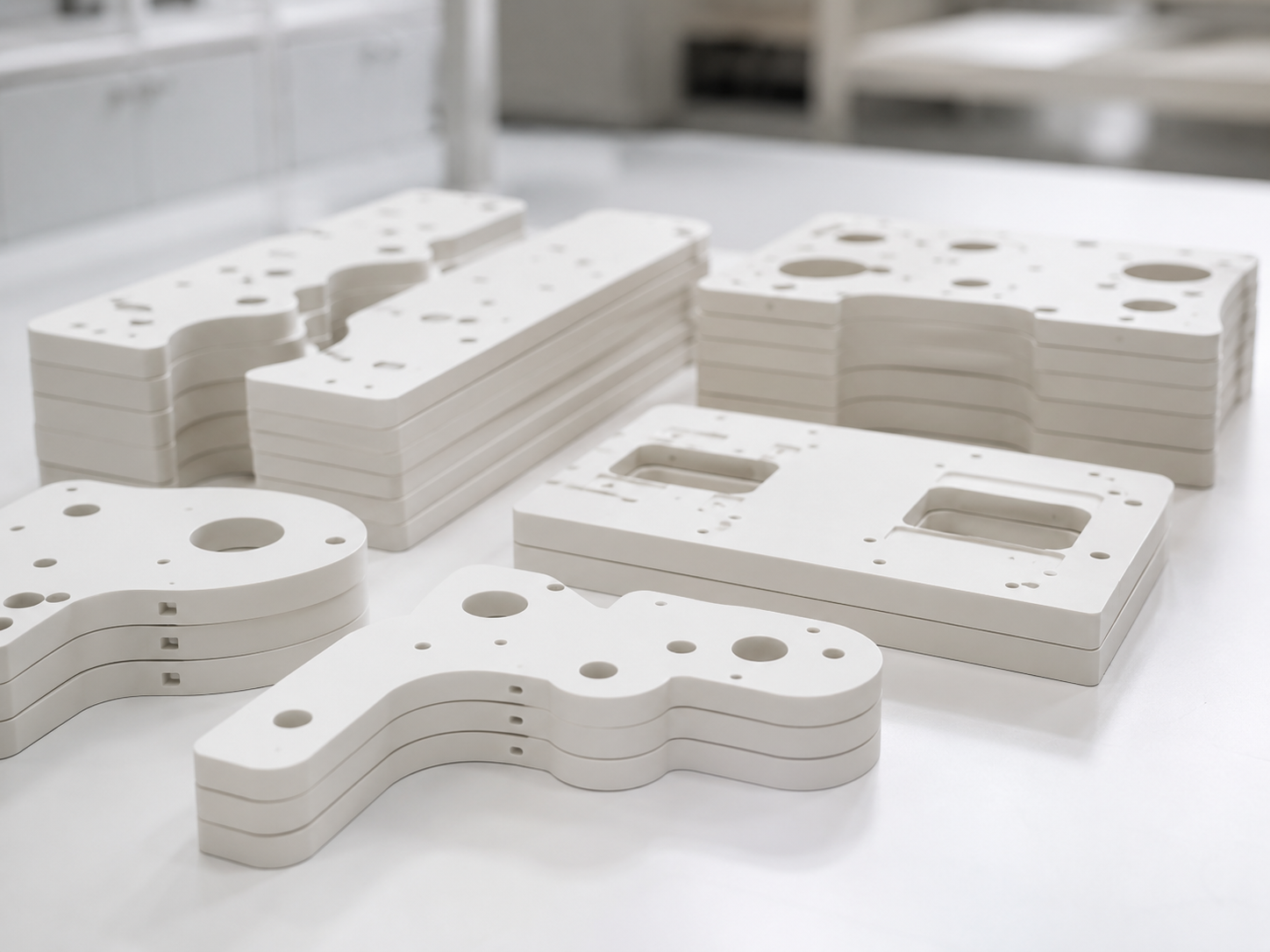
Trade and fabrication parts
Repeated components used within workshop production, fitouts, displays and fabrication work.
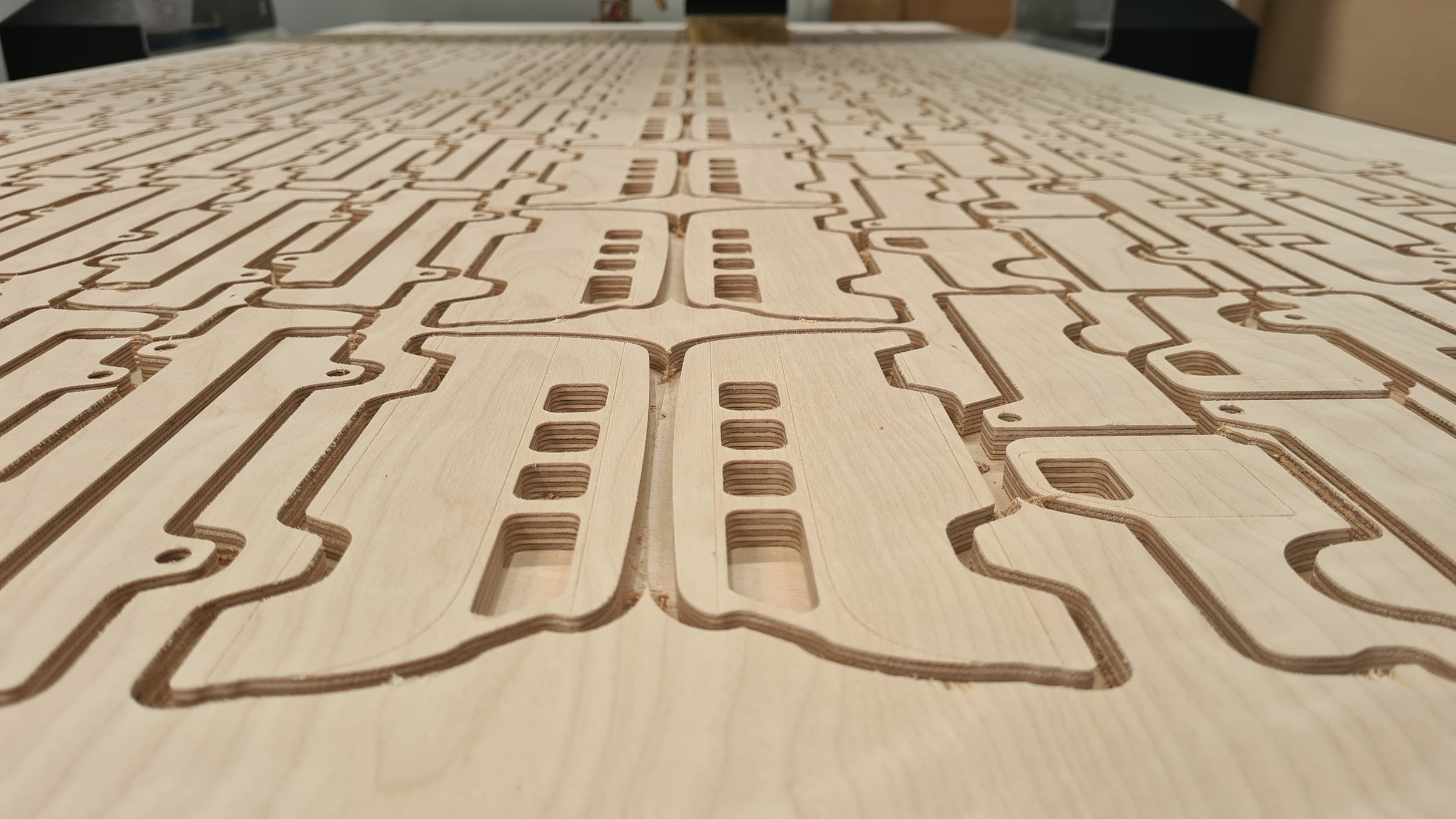
Nested sheet production
Multiple parts arranged across full sheets to make practical use of material and keep quantities organised.

Handed & Matching Components
Left-hand, right-hand, mirrored or matched parts produced from clearly named files and quantity lists.
Is the product ready for small-batch production?

A suitable production project normally has:
a defined component or product
approved overall dimensions
useful CAD files, drawings or an existing production reference
a proposed material and thickness
quantities for each different part
repeatable geometry suited to CNC routing
a budget that allows for setup and programming
clear responsibility for final product approval

The project may not be ready when:
only an idea or inspiration image exists
finished dimensions, material or quantities are unknown
the product is still changing substantially
production design is expected to be included in the cutting price
the required price depends on industrial mass-production volumes
the work requires materials or processes outside the workshop capability
Projects that still require substantial design development should begin through Designers & Custom Projects.
Small-Batch Production begins when there is enough information to prepare, test or run the actual production components.
What to Send for a Small-Batch CNC Quote
PRODUCTION QUOTE INFORMATION
The more complete the production information, the easier it is to review the files, identify setup work and prepare an accurate quote.
Files or drawings - Supply the latest DXF, DWG, STEP, 3DM or other useful CAD files.
Marked-up PDFs, dimensioned drawings and photographs can provide supporting information.
Material and thickness - Include the required material, grade and nominal thickness.
State whether the material is being supplied or needs to be included in the quote.
Quantity of every part - List the quantity required of each individual component.
Do not rely only on the number of shapes shown in a drawing or supplied nest.
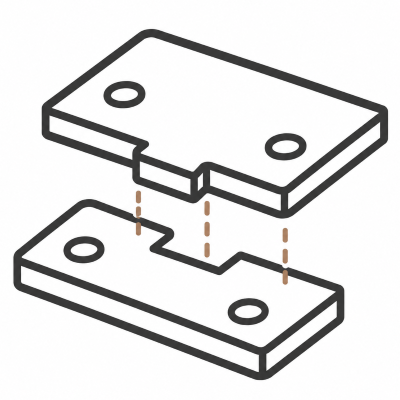
Machining details - Identify through-cuts, holes, pockets, rebates, slots, engraving, different depths, fitted joints and any critical internal corners.
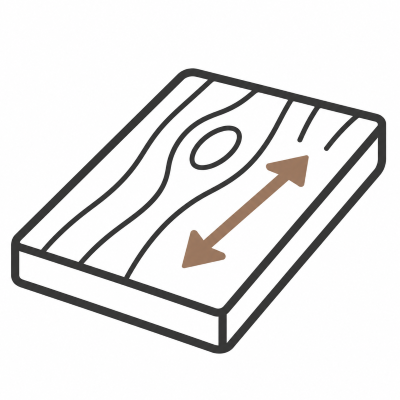
Part orientation - Mark any important grain direction, finished face, material face or matching requirements.
Production stage - Tell us whether this is a first production run, an updated production version, a repeat order, a replacement batch or an increased quantity.

Repeat potential - Include likely later quantities or expected reorder frequency where known.

Timing - Include the required date and any fixed deadline.

Where several components form one product, include a parts list and clear naming system so quantities and matching pieces can be checked.
Material, Quantity and Sheet Yield
MATERIAL CHOICE
Material and thickness
The material should suit the product, machining operations, fitted details and final use.
Nominal sheet thickness may differ from the material delivered. This matters where slots, tabs, pockets and rebates need to fit accurately.
Quantity and part mix
A product may require different quantities of each component.
Left-hand, right-hand, mirrored and matching parts need to be clearly identified rather than assumed from the drawing.
Nesting and sheet yield
Parts are arranged across the material while considering:
grain direction
finished face
cutter clearance
workholding
quantity
part spacing
matching components
useful offcuts
Some quantities use full sheets more efficiently than others. Where there is a practical option, this can be discussed before the batch is approved.
Keeping production files and batches organised
Stable repeat production depends on clear file names, part quantities and an approved production version. Each batch should remain tied to the agreed material, thickness and machining instructions so later orders can be checked against the correct setup.

Revisions
Changes made after an earlier run should be marked and supplied as a new approved revision.

Stable files
Approved production files can usually be retained as the starting point for later batches.
Part names
Use clear and consistent names for every different component.
Identification
Simple engraved names, numbers or orientation marks can be included where suitable and agreed in the quote.

Quantities
Provide a current quantity list for each order, even where the same parts have been produced before.
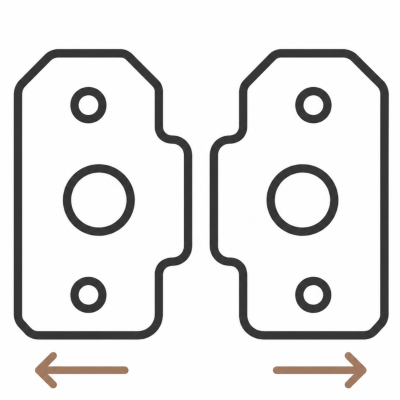
Handed parts
Clearly identify left-hand, right-hand and mirrored versions.
Do not rely on the workshop to compare several old files and guess which version is current.
Send the latest approved production information and identify every change before the next run begins.
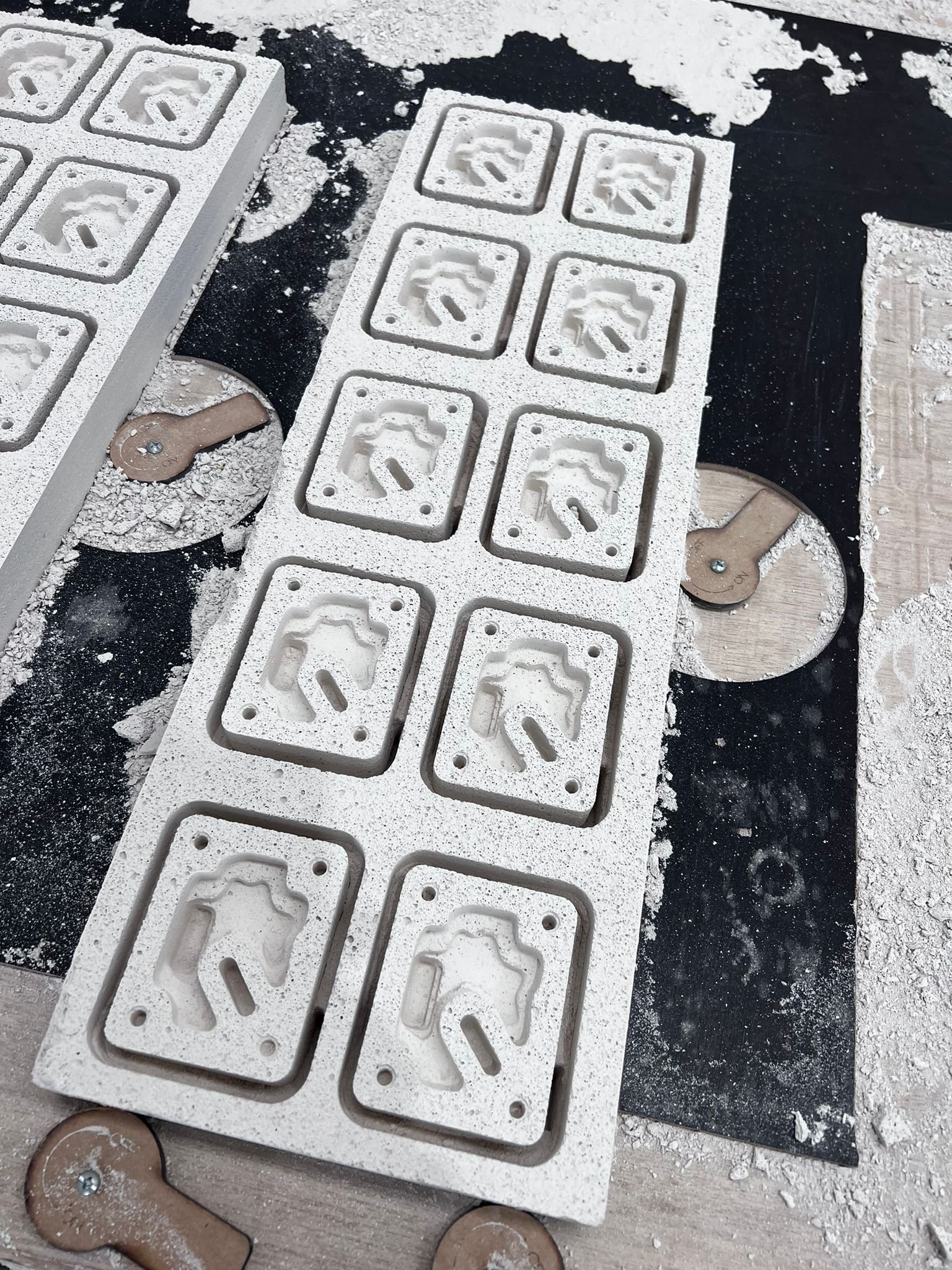
Larger batches involve more than multiplying the part count
LARGE QUANTITIES
An increased order can affect:
the number of sheets required
material availability
nesting layouts
machining sequence
tool wear
part handling
counting and grouping
workshop storage
packing
collection or freight
Tell us the expected quantity range early, even where the first run is small.
This allows the production method and files to be prepared with later quantities in mind.
Williamstown CNC Works is set up for suitable first runs, small batches and repeat CNC production. Very large industrial volumes requiring automated assembly, packaging or distribution may be better suited to a larger contract manufacturer.
ADDITIONAL WORKSHOP SCOPE
CNC production does not automatically include every finishing task
The production quote is normally based on the approved files, material, quantities and agreed machining operations.
The following work is not automatically included:
product design
CAD redrawing or file repair
fitted-joint development
test cuts
material supply
sanding
edge finishing
laminating
trial assembly
full assembly
coating or finishing
labels
packaging
freight preparation
delivery
Where the project and workshop schedule are suitable, additional work can be reviewed and quoted separately.
Include the complete required scope when requesting a quote so the price reflects the work actually required.
PRODUCT RESPONSIBILITY
The customer approves the product and production information
Williamstown CNC Works reviews files for practical CNC production, but the customer remains responsible for confirming:
finished dimensions
product design
part quantities
material suitability
structural requirements
joint arrangement
assembly clearances
compliance requirements
suitability for the final use
A successful test component or first batch may help confirm machining, fit and assembly, but it does not automatically certify the complete product.
Where substantial design, engineering or compliance work is still required, that work should be completed before repeat production begins.
Small-Batch CNC Production FAQs
-
Not always.
A project can be reviewed from finished CAD files, a working prototype or sufficiently detailed drawings.
Where fit, assembly or function still needs checking, a test part or prototype may be recommended before the full batch is produced.
CAD preparation and prototype development are quoted separately from the batch cutting.
-
Yes, where the product is sufficiently defined and suitable for our workshop.
We can review file cleanup, redrawing, fitted joints, part naming, quantities, material thickness, test pieces and sheet nesting as paid production-development work.
This is different from absorbing open-ended product design into the cutting price.
-
There is no single minimum quantity that suits every project.
The practical minimum depends on the size of the parts, material, file condition, setup, machining operations and likely repeat potential.
Very small jobs still need to cover file review, programming, setup and the workshop minimum charge.
-
It may.
The first run often includes more file preparation, programming, testing and setup than an unchanged repeat order.
The final cost still depends on material, quantities, sheet yield, machining time and any additional workshop work.
-
Stable production files can usually be retained for later batches.
Any later changes to the geometry, material, thickness, quantity or machining instructions should be identified before reordering.
-
Yes.
Each version needs to be clearly identified in the files and quantities. Do not rely on visual interpretation or assume that similar-looking parts are interchangeable.
-
Simple engraved names, numbers or orientation marks may be added where suitable.
The required identification should be included in the file instructions and quote request.
Stickers, detailed sorting, packing or other identification systems need to be discussed and quoted separately.
-
Some assembly, sanding, laminating or finishing work may be possible where the project is suitable.
These services are not included automatically and need to be reviewed and quoted separately.
-
Yes, but the change needs to be reviewed.
Different material grades and thicknesses can affect tooling, machining time, edge finish, nesting and fitted joints.
A material change may require revised programming or another test cut.
-
We focus on suitable prototypes, small batches and repeat production rather than very large industrial manufacturing volumes.
Send the expected quantity and reorder frequency so we can assess whether the project suits our workshop.
Send your small-batch production details
Upload the latest CAD files, drawings or prototype information and include the material, thickness, quantity of each different part and required date. Tell us whether this is a prototype, first batch or repeat order, and identify any likely future quantities, critical fits, handed parts or additional workshop requirements.
We will review the information and come back with any questions required before quoting.