
CONSTRUCTION & TRADE
Offsite CNC cutting and component production for builders, joiners, shopfitters, fabricators, set builders and other trades working from approved files or reliable project drawings.
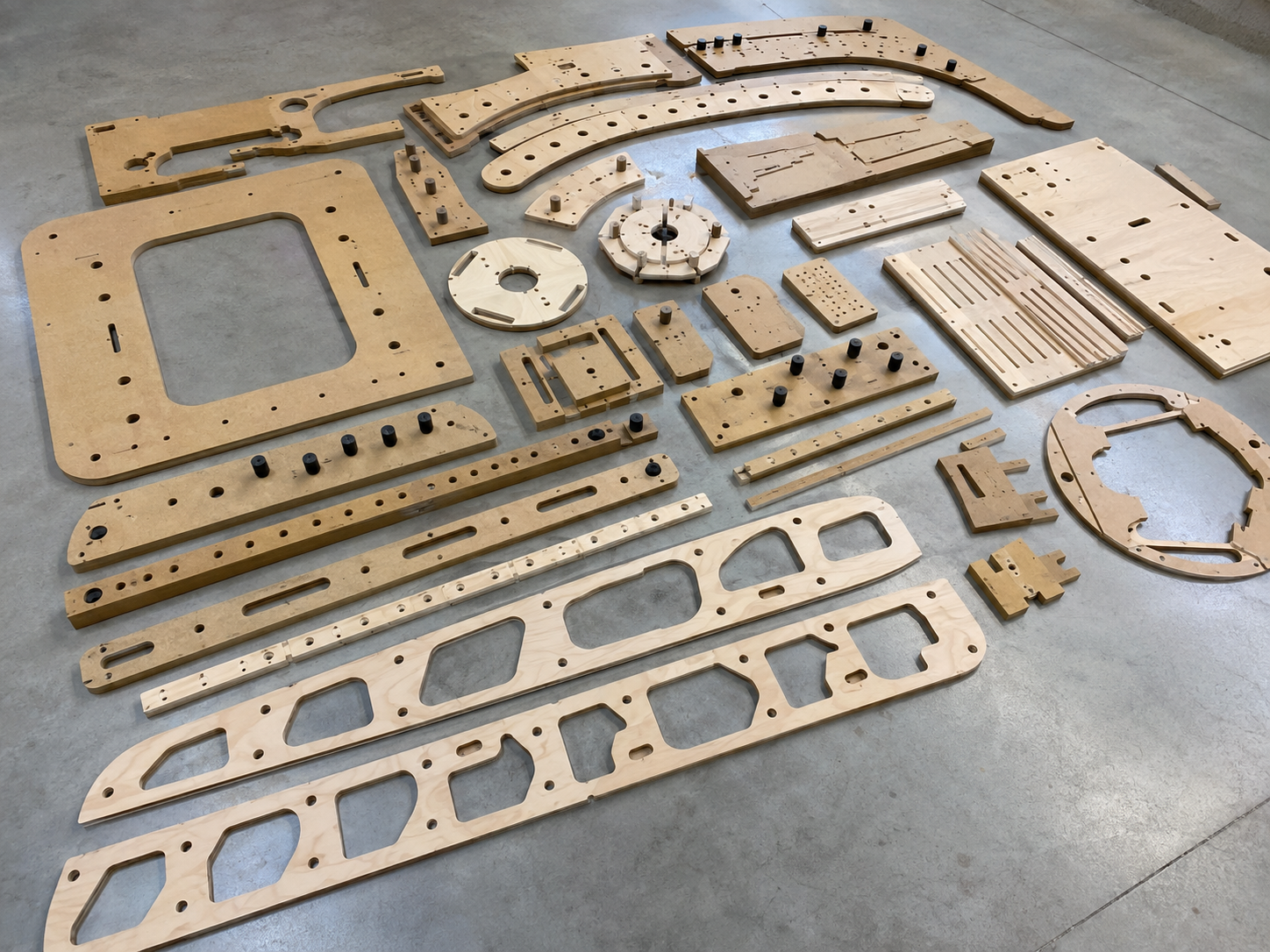
Williamstown CNC Works produces plywood, MDF, timber and suitable plastic components with profiles, holes, pockets, rebates, slots and shaped details.
Projects can begin with production-ready CAD files or with useful drawings that still require paid file preparation before machining.
Work is completed from our Williamstown North workshop for commercial projects across Melbourne.
CNC Cutting for Builders, Fitout and Trade Projects




OFFSITE CNC COMPONENT PRODUCTION
Offsite CNC Component Production for Construction and Trade Projects
Construction and trade projects often contain parts that are slow, repetitive or difficult to produce accurately by hand.
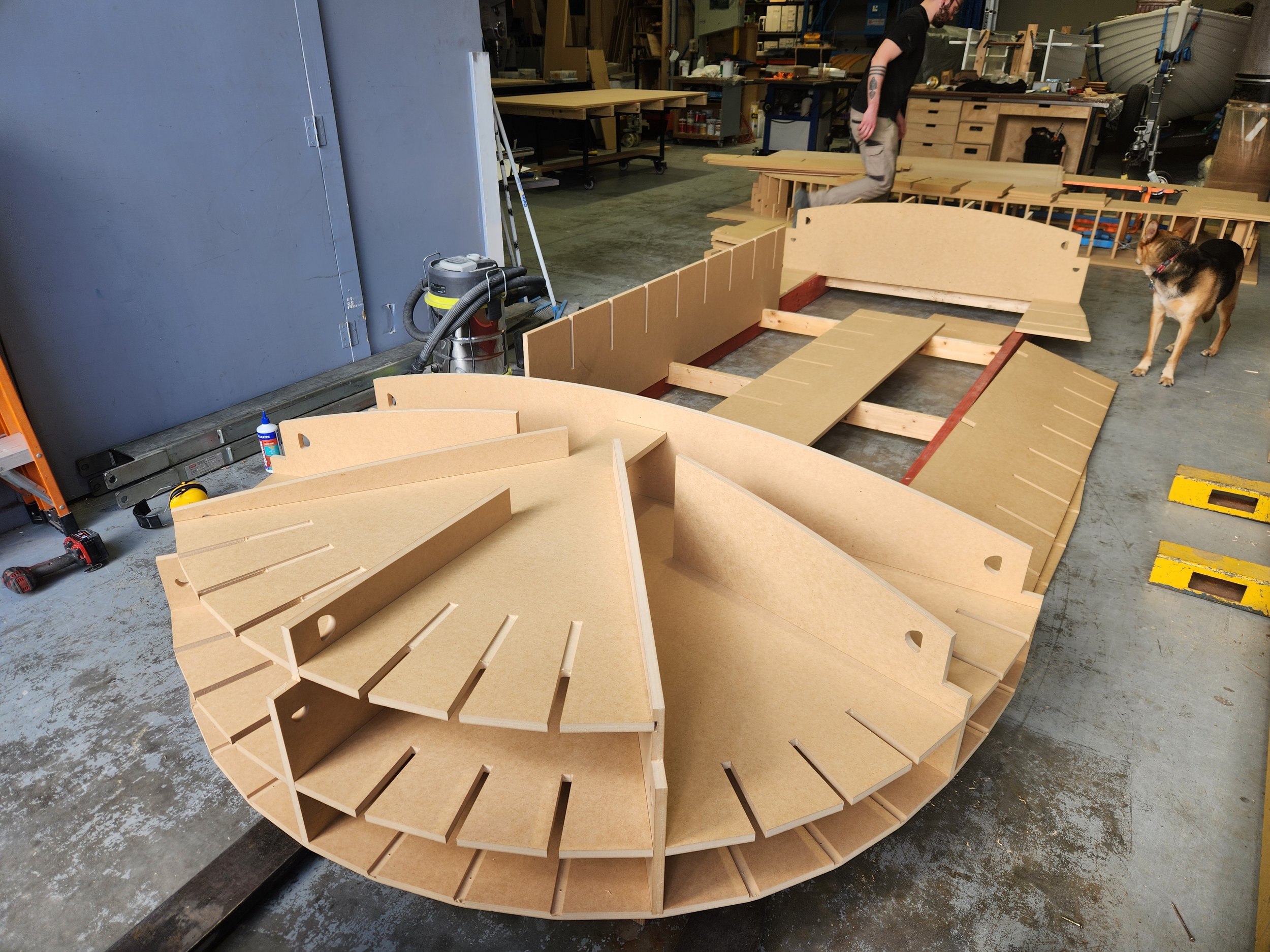
CNC machining can be used to prepare component sets before they reach your workshop or site. This may include shaped panels, curved formers, repeated profiles, routed joints, locating holes and parts that need to match across a project.
You continue to control the design, verified dimensions, assembly and installation.
We review the supplied information, prepare the machining and produce the agreed components from our workshop.
The job may be a single project package, repeated parts within one build or an established component set required across several projects.
START WITH THE STAGE YOU ARE AT
Where are you in the production process?
Being in construction or trade does not automatically mean the job is ready for CNC production.
The correct pathway depends on how settled the drawings, dimensions, material and quantities are.

The project is still being designed
The overall result may be understood, but the dimensions, construction details or material decisions are still changing.
The project is not yet ready for production cutting.
Substantial design development, site coordination or drawing work needs to be completed before the components can be reliably quoted and machined.

The project is defined but the files need preparation
You have reliable dimensions, useful drawings or a developed model, but the individual CNC parts have not yet been prepared.
This may require:
extracting production geometry
cleaning or redrawing files
separating components
confirming machining depths
identifying left-hand and right-hand parts
preparing test pieces
arranging production nests

The production files are ready
The finished geometry, material, thickness, quantities and machining operations are already known.
We can review the supplied files, prepare the CAM and quote the cutting.
This is normally the quickest pathway into the workshop.
The components have been made before
You need another project set or another quantity of an established component.
Send the latest approved files, current quantities and details of any changes.
Stable files may be retained as a starting point for future work, but each order is still reviewed and quoted according to its current scope.
Do not approve production while site dimensions or construction details are still likely to change.
Late changes can require revised files, new programming, replacement material and another production run.
CNC Cutting Customers We Suit

Fitout and shopfitting businesses
Panels, trims, fixtures, backing components, routed details and component sets prepared for workshop or site assembly.
Architects, designers and draftspersons
Projects where the design information is developed enough to begin production review, file preparation and machining.

Builders and project teams
Shaped components, repeated parts and defined packages prepared from reliable project information.

Set, exhibition and display builders
Repeated shapes, layered components, temporary structures, display elements and project-specific parts made from approved drawings.

Joiners and cabinetmakers
Specialist profiles, curved parts, routed panels and unusual components that sit outside standard workshop production.

Fabricators and specialist trades
Timber, plywood, MDF and suitable plastic parts that support another fabrication or production process.
The customer does not need to operate their own CNC router.
They do need to provide enough reliable project information for the components, material and scope to be understood
Typical CNC-Cut Construction and Trade Components
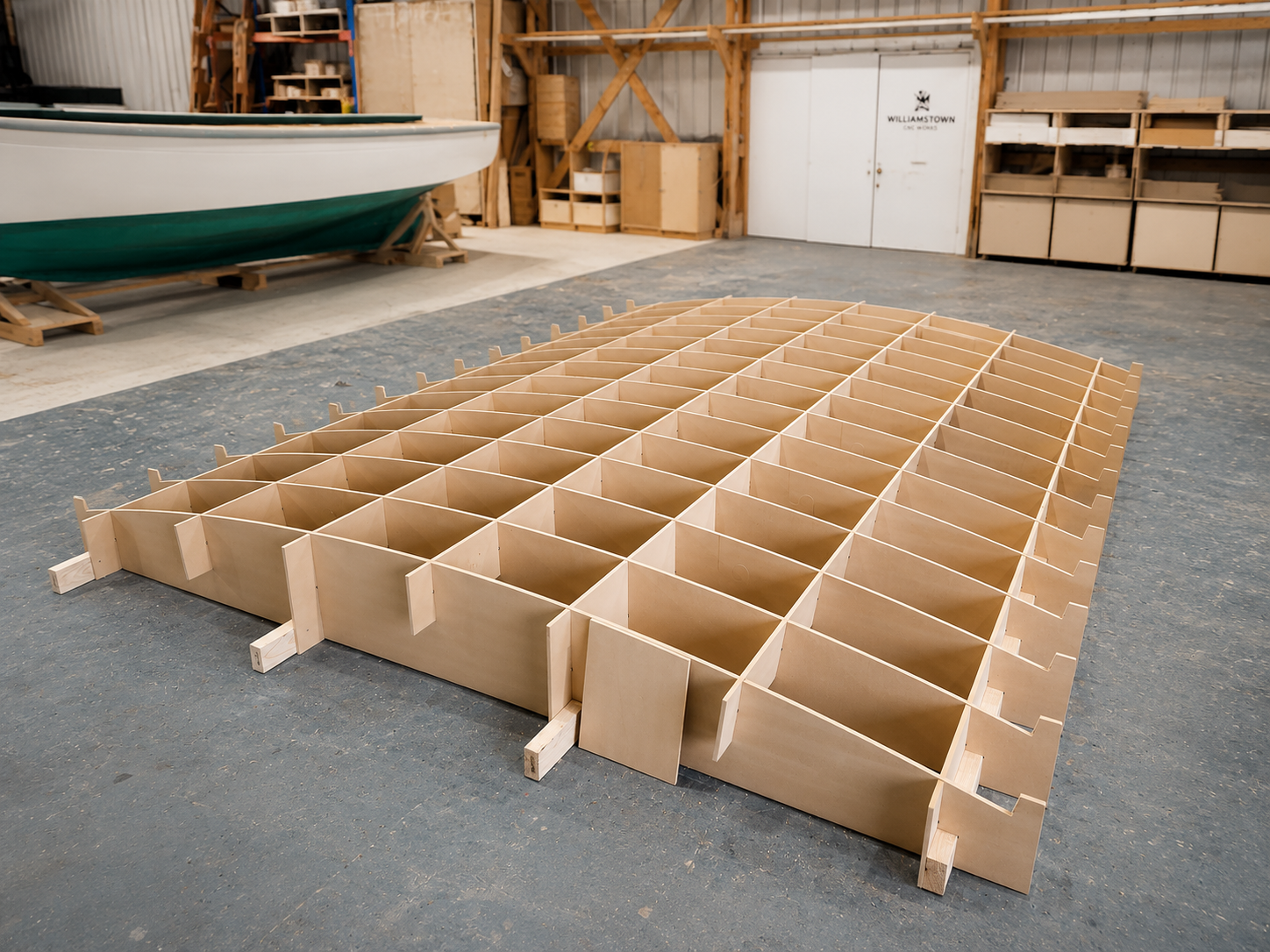
Curved formers and shaped building parts
Ribs, formers, curved supports and repeated profiles for joinery, fitout, fabrication and architectural work.
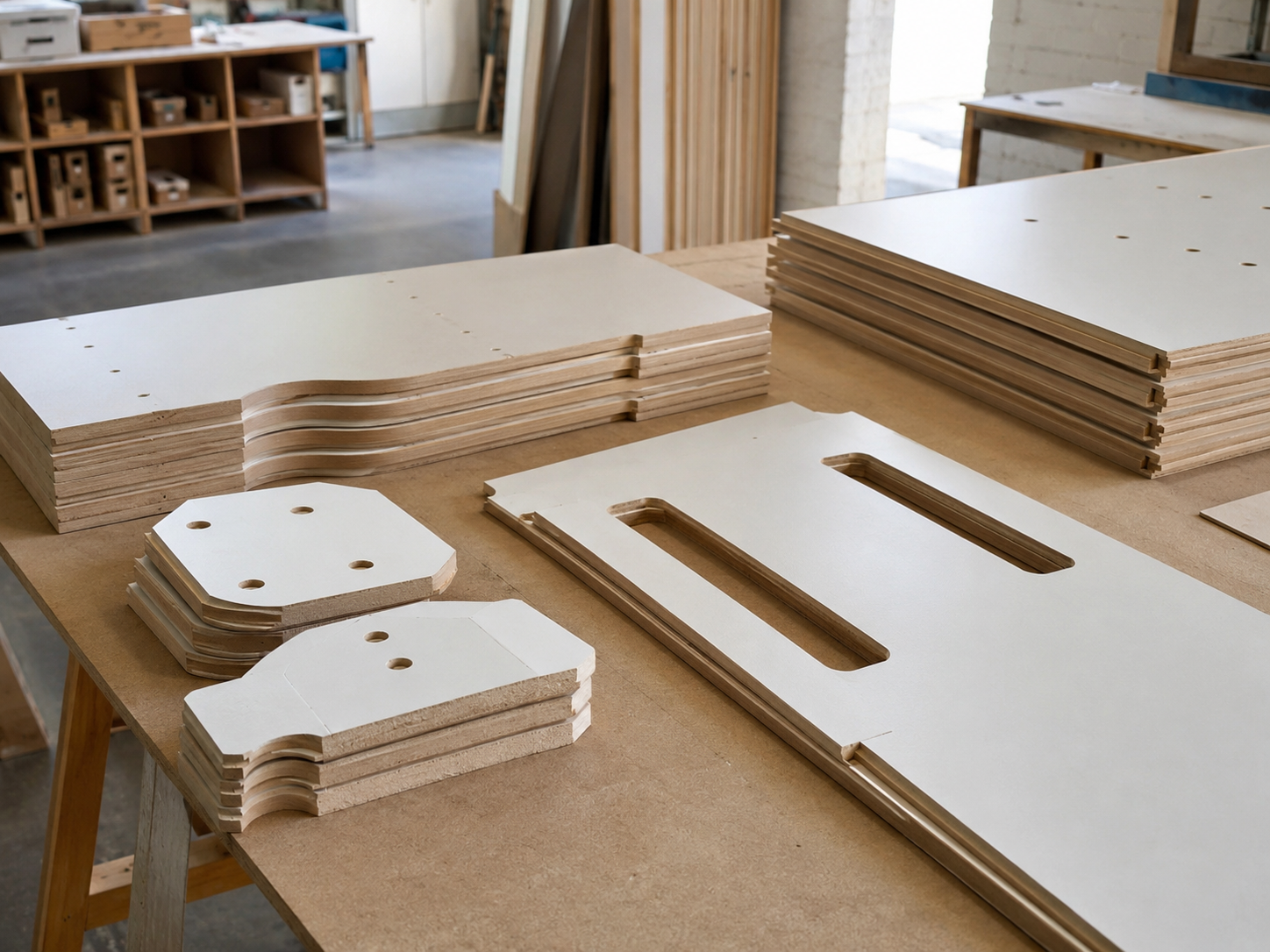
Panels and routed profiles
Shaped panels, cut-outs, penetrations, edge profiles and repeated components produced from sheet material.
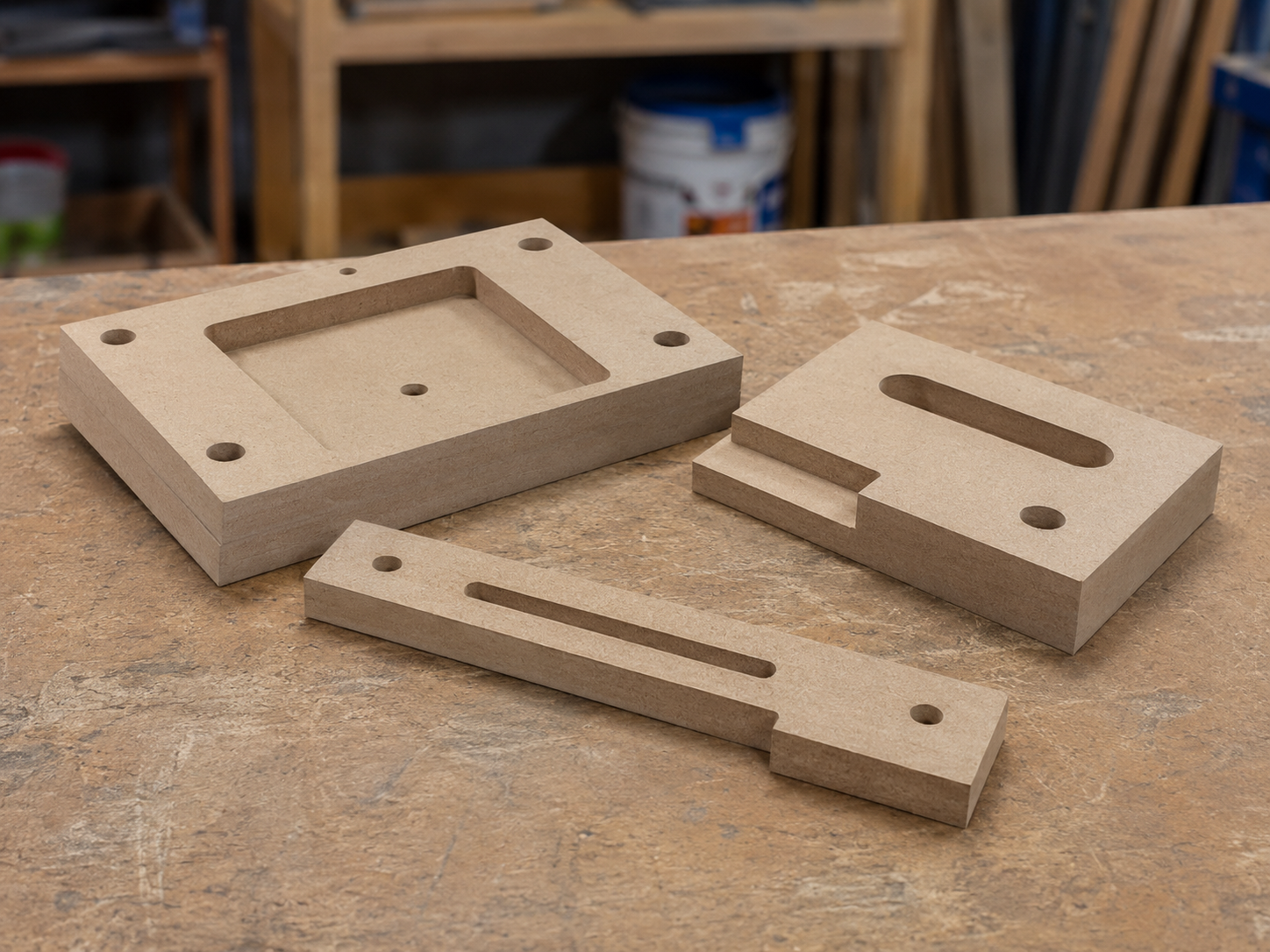
Holes, pockets, rebates and slots
Components requiring several machining operations completed from the same production file.
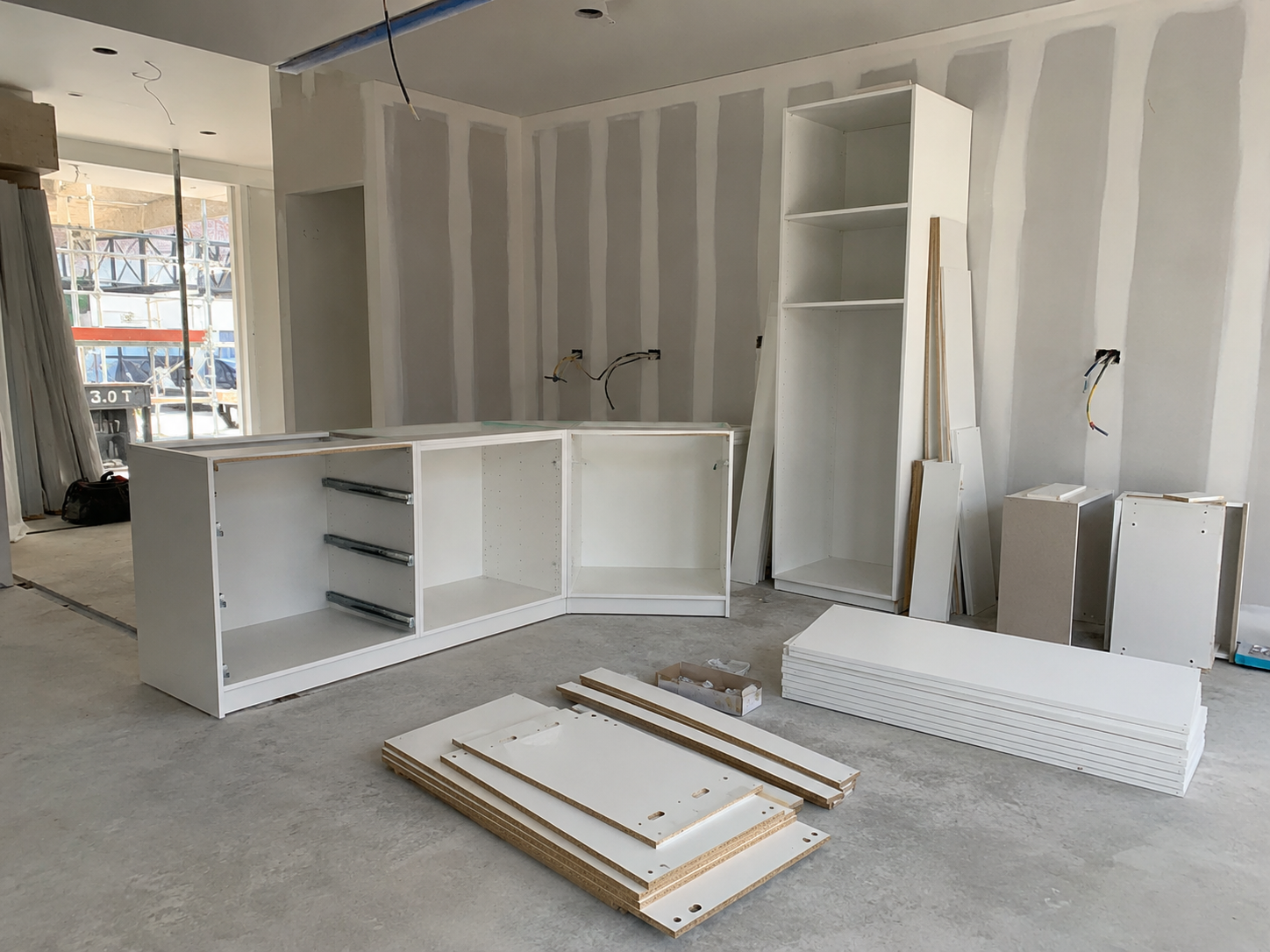
Fitout and joinery components
Supports, backing parts, feature components, panels and shaped details prepared for the customer’s own assembly.
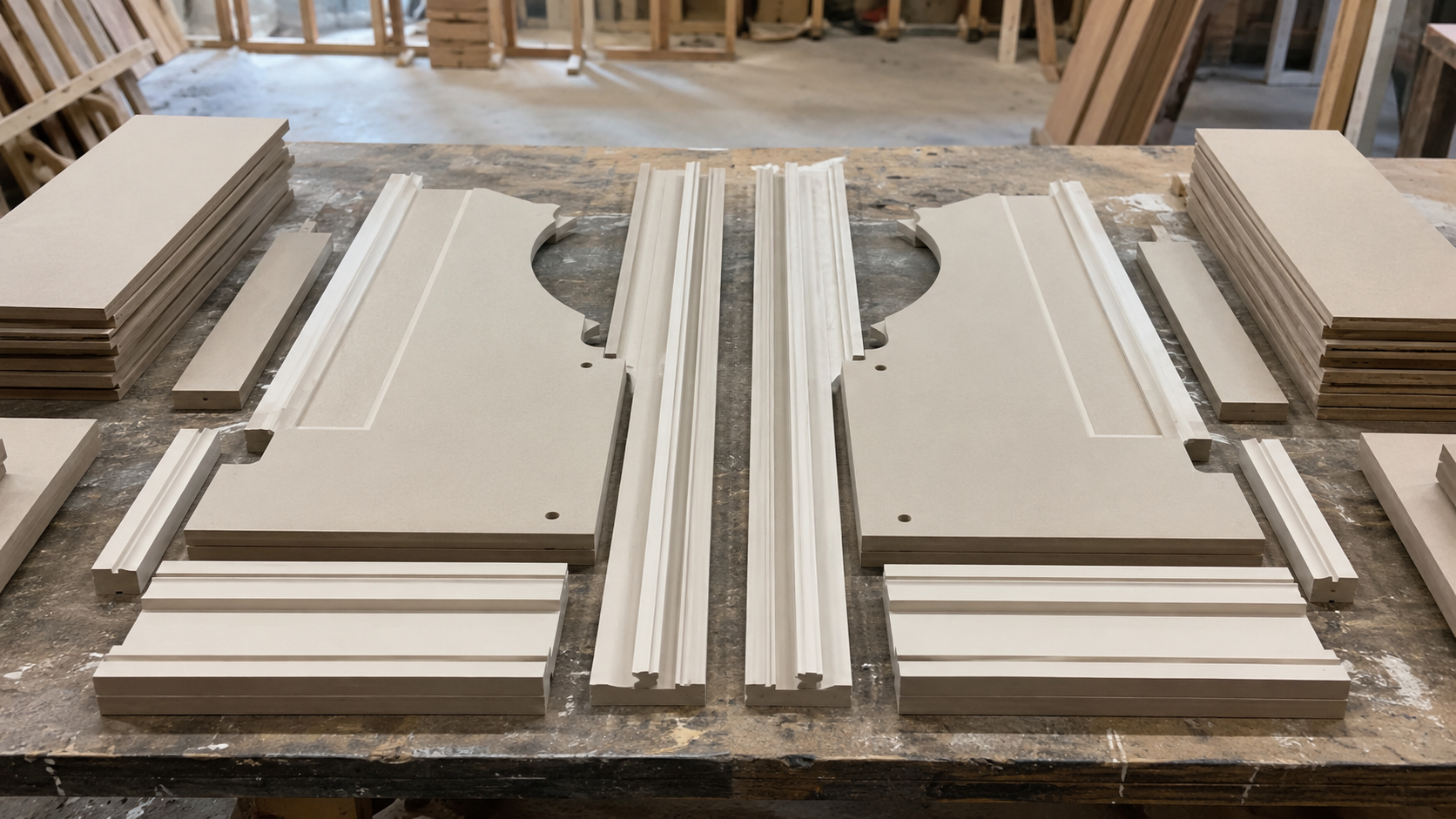
Handed and mirrored components
Left-hand, right-hand, matching and mirrored parts produced from clearly identified files and quantity lists.
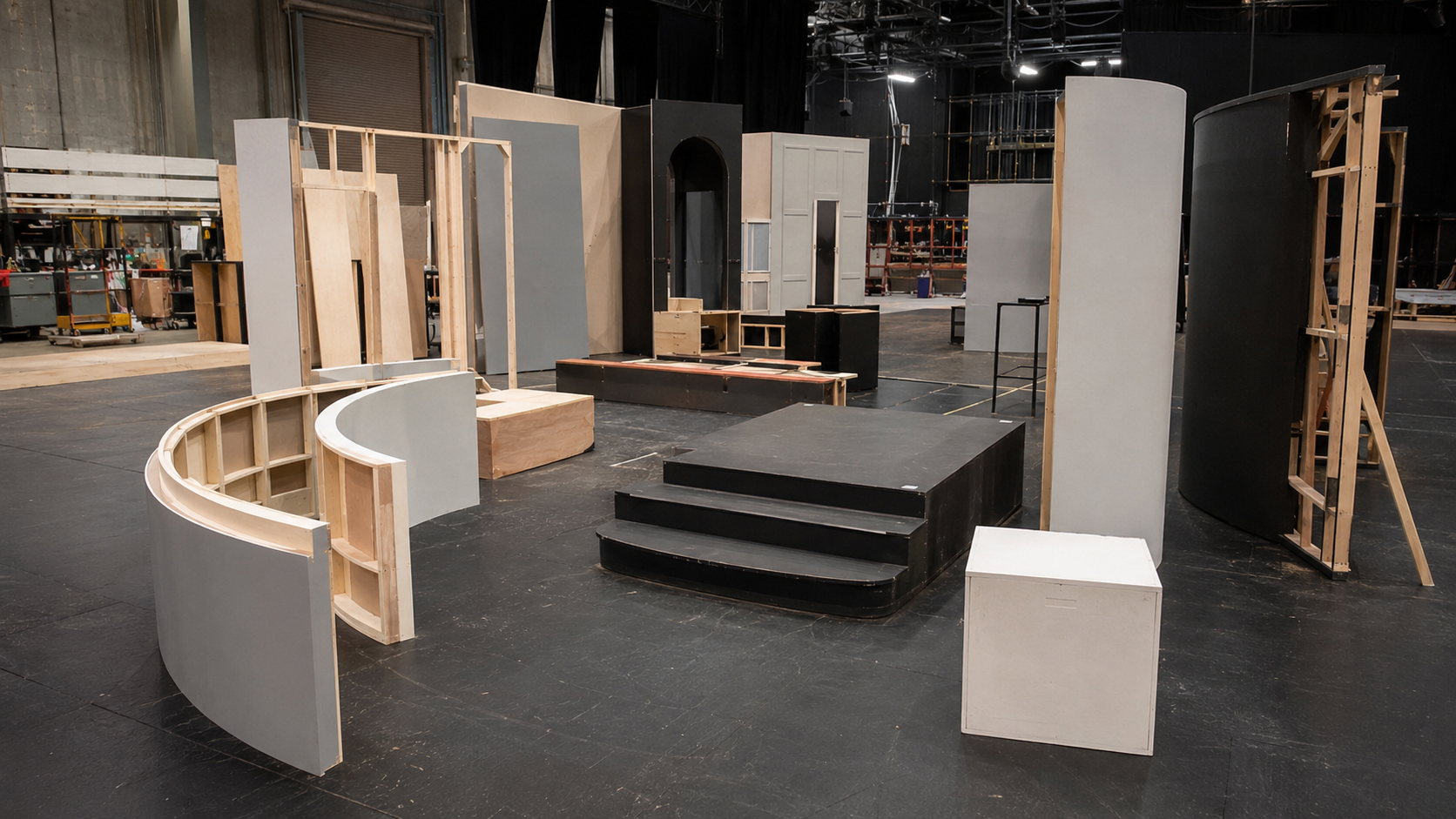
Set, exhibition and fabrication parts
Project-specific components produced in controlled quantities for temporary builds, displays and workshop fabrication.
Templates, routing guides and drilling jigs are covered separately on the Templates & Patterns page.
COMPONENT SUPPLY, NOT COMPLETE PROJECT CONTROL
CNC Components Supplied for Your Team to Assemble
Williamstown CNC Works can act as the external CNC workshop behind a construction, joinery or fabrication project.
The agreed scope may include:
CNC-cut components ready for collection
parts grouped into project sets
repeated profiles or shapes
handed and mirrored components
routed pockets, holes, rebates and slots
layered or laminated components where separately quoted
test pieces for critical fitted details
additional workshop preparation where agreed
The customer continues to control:
the overall project design
verified site dimensions
structural and compliance requirements
final assembly
installation
coordination with other trades
This division keeps the production scope clear and allows us to focus on preparing and machining the components accurately from approved information.
FROM PROJECT INFORMATION TO COMPONENT SET
How a construction or trade CNC job proceeds

Send the project information
Supply the latest CAD files, drawings, dimensions, material information, part quantities and required date.
Identify which information is approved and which details are still subject to change.




Review the scope
We review the parts, material, machining operations, quantities and any workshop work required.
Missing information, unsuitable geometry and unclear dimensions are identified before quoting.


Prepare the production files
Finished files proceed into CAM and nesting.
Where production geometry still needs to be extracted, repaired or redrawn, that work is quoted separately.
A test piece may be recommended where fit or material thickness is critical.
Machine and organise the parts
Components are machined according to the approved production information.
Where agreed, parts may be grouped, marked or arranged into project sets.


Collect, deliver and retain the approved files
Parts are prepared for collection or agreed delivery.
Stable production files can usually be retained as the starting point for later project sets or repeat orders.
A retained file does not override new drawings, changed site dimensions or revised construction requirements.
Each new order should identify its current quantities and any changes.
What to send for a project CNC quote
PROJECT QUOTE INFORMATION
A trade enquiry is easier to review when the files, dimensions, quantities and project responsibilities are clear.

Current files and drawings - Supply the latest available CAD files, production drawings or marked-up PDFs.
Verified dimensions - Identify the dimensions that control the finished parts. State who has checked the project or site dimensions.
Material and thickness - State whether the material is being supplied or needs to be included in the quote.
Quantity of each part - Provide a clear quantity for every different component.
Machining operations - Identify through-cuts, holes, pockets, rebates and any other details.
Part names and handed pieces - Clearly identify left-hand parts, right-hand parts, mirrored pieces, matching sets and repeated items.


Additional workshop scope - Explain whether the job requires cutting only, trial assembly, laminating, sanding, delivery or other workshop work.
Required date - Include the required date and any fixed construction or installation deadline.

Where a project contains many different parts, include a component list with file names, quantities and revision details.
Reliable production starts with reliable dimensions
VERIFIED PROJECT INFORMATION
CNC machining can reproduce the approved geometry, but it cannot determine whether unverified project dimensions are correct.
The customer is responsible for confirming:
overall dimensions
site measurements
finished levels
clearances
left-hand and right-hand arrangements
connections to existing construction
allowances for finishes and adjoining work
installation conditions
Where a dimension is critical, identify it clearly on the drawing.
Where several dimensions depend on a common datum or reference edge, show that information rather than supplying unrelated measurements.
Site measuring is not automatically included in the CNC production scope.
Where site attendance is specifically required and commercially suitable, it must be discussed and quoted separately before work proceeds.
Material and Machining Decisions Affect the Result
Material and thickness
Common construction and trade work may use:
plywood
MDF
birch plywood
veneered boards
solid timber
suitable plastics
The material grade and actual thickness can affect machining, edge finish, fitted joints and the final result.
Machining operations
CNC work can combine:
profiles
holes
pockets
rebates
slots
locating features
layered components
Each operation should be clearly identified in the files or drawings.

Fits and internal corners
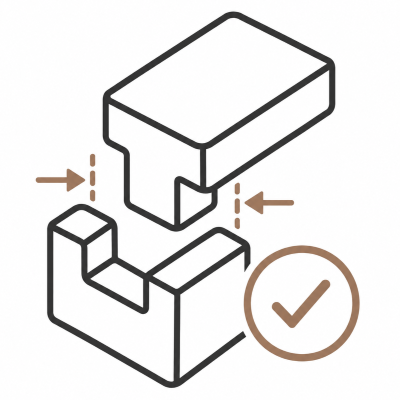
Actual material thickness matters where parts need to fit together.
Internal corners also carry the radius of the cutter unless reliefs or another joint detail are included.
Critical fits may require the production material to be measured and a test piece machined before the full set proceeds.
Keep Part Names, Quantities and Revisions Clear
Revisions
Use a clear revision system and send the latest approved file set.

Grouping
State if components need to be grouped by room, level, assembly, item or project stage.
Part names
Use clear and consistent names for every different component.

Identification
Simple engraved names, numbers or orientation marks may be included where suitable.
Quantities
Provide the required quantity for each part rather than relying only on the drawing layout.
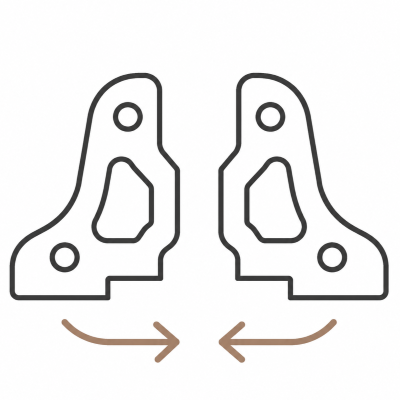
Handed parts
Mark handed and mirrored components clearly.
The workshop should not need to compare several old file sets and guess which version is current.
Send one approved production package and identify every change.
REPEAT PROJECT COMPONENTS
Established components can be produced again
Some construction and trade components repeat within one project. Others are used across several builds, fitouts or installations.
Once the geometry, material and machining are stable, the approved files can usually be retained as the starting point for later work.
A repeat order should still confirm:
current quantities
material and thickness
part revisions
machining requirements
grouping or identification
required date
delivery or collection requirements
Changes to material, thickness, geometry or assembly details may require revised programming or another test piece.
For products or component lines produced as ongoing batches, the Small-Batch Production pathway may be more appropriate.
Reduce Repetitive Hand Cutting Before Assembly
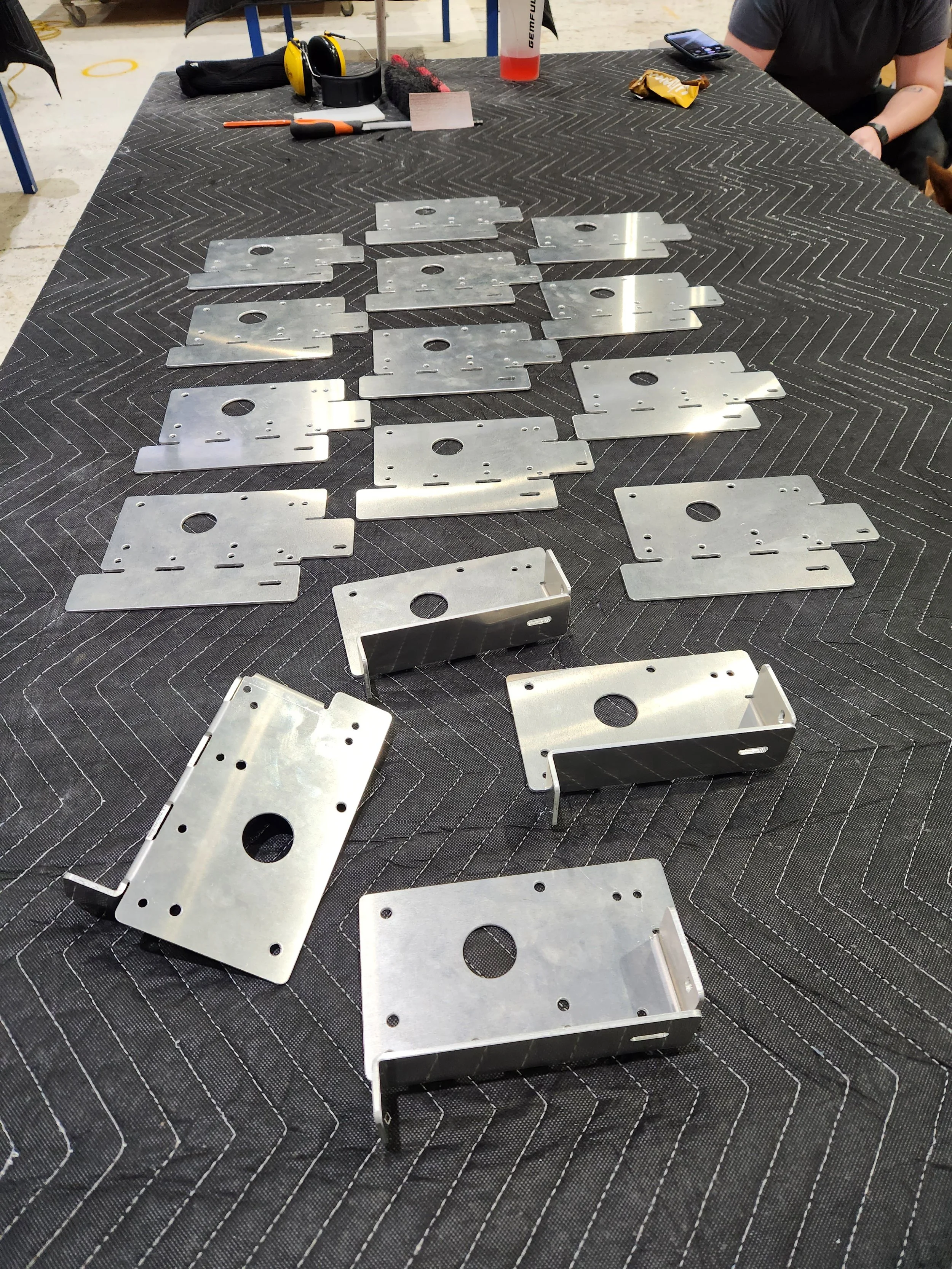
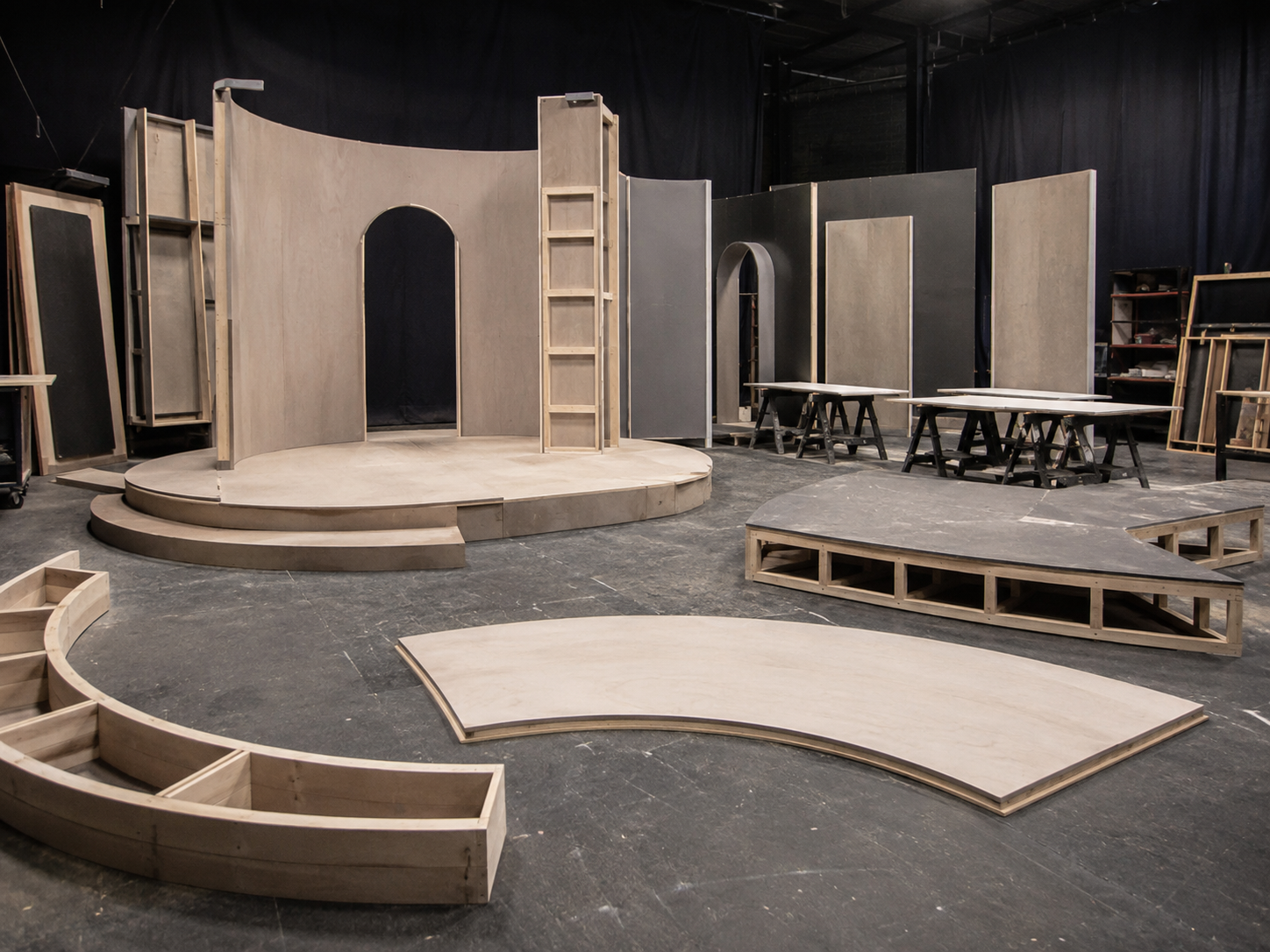
A well-prepared CNC component package can reduce the amount of repetitive measuring, marking, drilling and shaping carried out by hand.
This can be useful where a project includes:
many matching profiles
repeated holes or pockets
paired left and right parts
curved formers
several layers that need to align
parts that must arrive as an organised set
The benefit depends on the quality of the starting information.
Unclear dimensions, changing drawings and poorly identified quantities can remove the time saved through CNC production.
The most efficient trade work begins with an approved component package and a clear division of responsibility.
Is the project a good fit for our workshop?

Usually a good fit
defined construction or trade components
reliable drawings and dimensions
known material and thickness
clear part quantities
shaped or repeated project parts
routed features that suit CNC machining
work completed from our workshop
component sets for your own assembly
suitable ongoing trade relationships
specialist work that is inefficient to produce by hand

Usually not a good fit
unrestricted site installation
projects with no verified dimensions
unclear sketches with no material or quantity
complete structural design responsibility
free file preparation or repeated redesign
routine high-volume kitchen carcass outsourcing
very large industrial manufacturing volumes
metal machining
work relying on WCW to coordinate the complete build
one cheap decorative item with no commercial fit
Where the scope sits outside our workshop, we will say so rather than force the project into the wrong production process.
Construction and trade CNC questions
-
Yes, where the drawings provide enough reliable information to identify the actual CNC components.
A full drawing set may explain the project but still require the individual parts to be extracted, redrawn or prepared for production.
That file work is quoted separately where required.
-
Site measuring is not automatically included.
The customer should normally provide verified dimensions and approved production information.
Where site attendance is specifically required and the project is suitable, it needs to be discussed and quoted separately.
-
Yes, where the project is sufficiently defined.
File cleanup, redrawing, extracting components, adding machining details and preparing production geometry are paid services.
-
Useful files may include DXF, DWG, STEP, 3DM and dimensioned PDF drawings.
PDFs, photographs and sketches can help explain the project, but they may not provide production-ready geometry.
-
Yes.
One-off parts can be suitable where the project information is clear and the work justifies the programming, setup and workshop minimum charge.
-
Yes.
Provide a quantity for each different component, including left-hand, right-hand and mirrored versions.
-
Stable production files can usually be retained as the starting point for later work.
The current quantity, material, revision and required date still need to be confirmed for each order.
-
Yes, where the geometry, material, thickness and intended use are defined.
The customer remains responsible for confirming the design and structural suitability of the final construction.
-
Simple engraved part names, numbers or orientation marks may be included where suitable.
Detailed sorting, labels, packaging and grouping need to be stated and quoted.
-
Material can be reviewed as part of the quote.
State the required material and grade, or explain the project use where material selection still needs to be discussed.
-
Customer-supplied material may be accepted where it is suitable for the machine, workholding and required result.
The material needs to be inspected, and the handling and risk conditions should be agreed before machining.
-
Some laminating, trial assembly, sanding or finishing work may be possible where the project is suitable.
These services are not automatically included and need to be separately quoted.
-
Installation is not a standard part of the CNC component supply service.
WCW is primarily workshop-based.
Any site work must be specifically discussed and agreed.
-
Routine high-volume kitchen carcass outsourcing is not our main focus.
We are better suited to specialist shaped components, routed details, curved parts and defined project packages that sit outside standard cabinet production.
-
Include the required date when submitting the project.
Availability depends on the file readiness, material, quantity, machining scope and current workshop schedule.
No lead time is confirmed until the job has been reviewed and booked.
Send your construction or trade project details
Upload the files, drawings or reference information and explain what the project is.
Include the overall size, material if known, quantity, important holes or locating features and the required date. We will review the information and come back with any questions before quoting.